

Advancing quantum and nanoscale technologies from fundamental science to real-world applications.
Quantum Systems and Computing
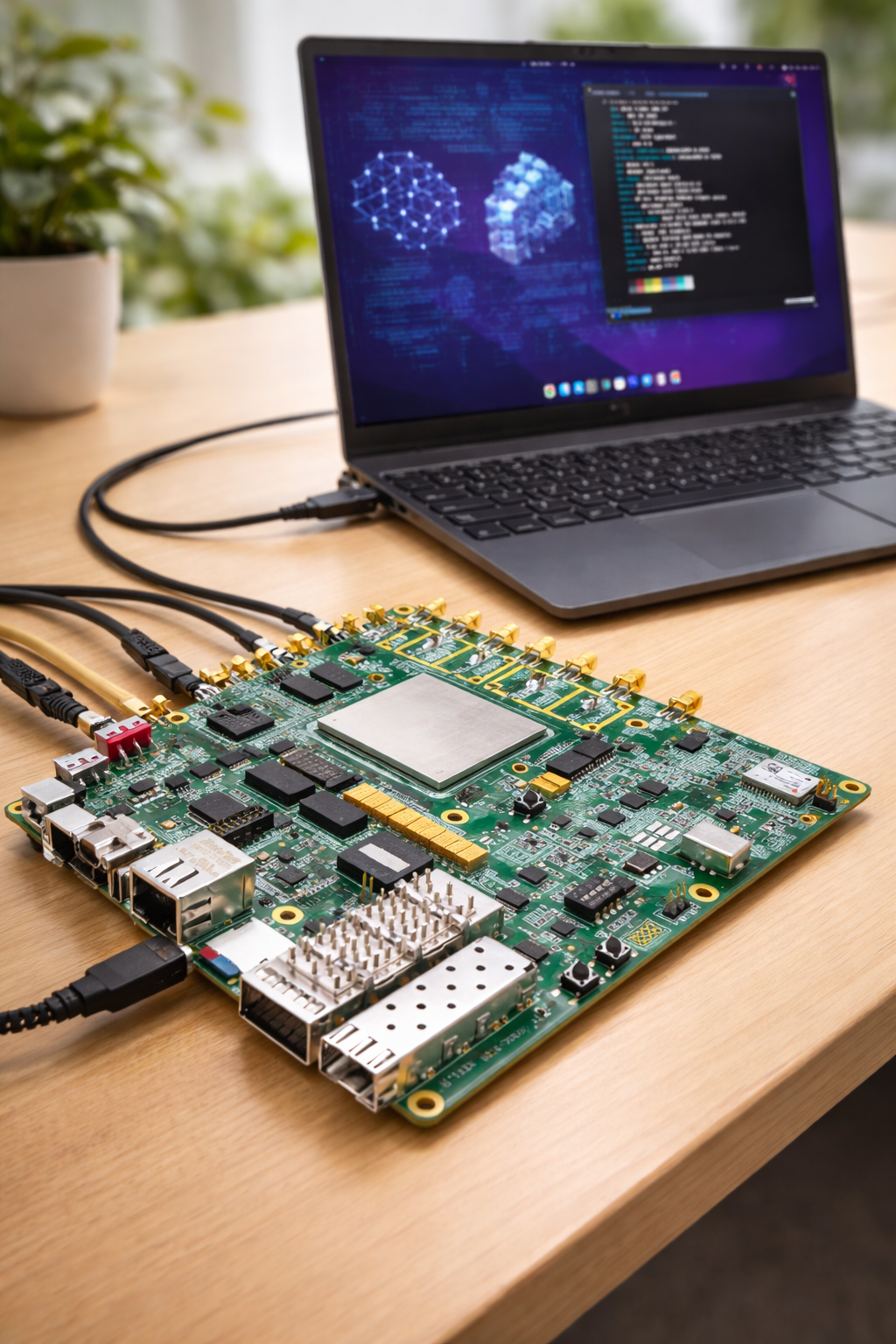
We develop quantum and quantum-inspired algorithms, with particular focus on QUBO formulations for combinatorial optimization, including industrial-scale applications. We design reusable libraries of quantum circuits and Quantum Machine Learning models to support scalable and modular algorithm development.
Our research includes automated toolchains for QUBO preprocessing, structured problem construction, and intelligent solver selection. We also develop multi-technology compilation frameworks, integrating Machine Learning models for backend selection and performance estimation, alongside Graph Neural Network predictors that analyze circuit DAGs to guide hardware mapping.
On the hardware and control side, we address noise modeling, simulation, and FPGA-based emulation (e.g., Ising machines, Simulated Quantum Annealing, Simulated Bifurcation). We design FPGA architectures and instrumentation for qubit control and readout, while investigating physical platforms such as semiconductor qubits, molecular spins, quantum dots, and photonic systems for QKD.
Molecular Electronics
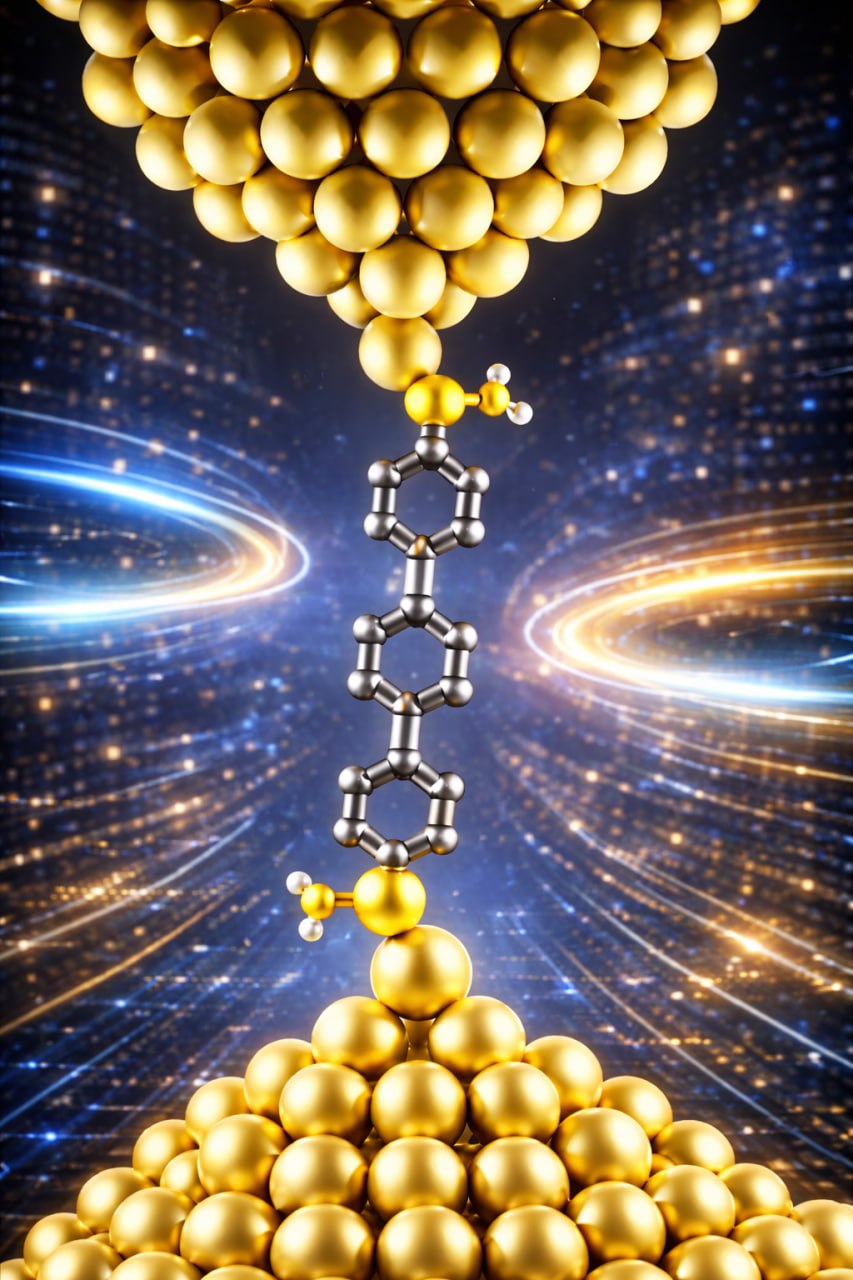
The molecular electronics activities develop devices and design methodologies for computation and sensing based on single molecules and nanoscale structures. A core research line addresses Molecular Field-Coupled Nanocomputing (FCN), where information is encoded in molecular polarization and propagated via electrostatic interactions. Ab initio simulations are used to study electronic structure and charge transport, and to derive compact, scalable models for fast device and circuit simulation, enabling logic, logic-in-memory, and neural-inspired architectures with CMOS integration.
We investigate molecular junctions, molecular FETs, and molecular electrets for logic and memory, selecting molecular families according to functionality and translating first-principles results into circuit-level models. In parallel, we develop nanowire- and molecule-based sensors for small-molecule detection, combining chemophysical simulations, compact modeling, and experimental validation to realize smart sensing platforms integrated with CMOS electronics.
Finally, we study advanced FET architectures through multi-scale simulation flows, from atomistic modeling to compact model extraction and circuit-level assessment, supporting the hierarchical design and benchmarking of emerging electronic technologies.
Beehive Health Prediction
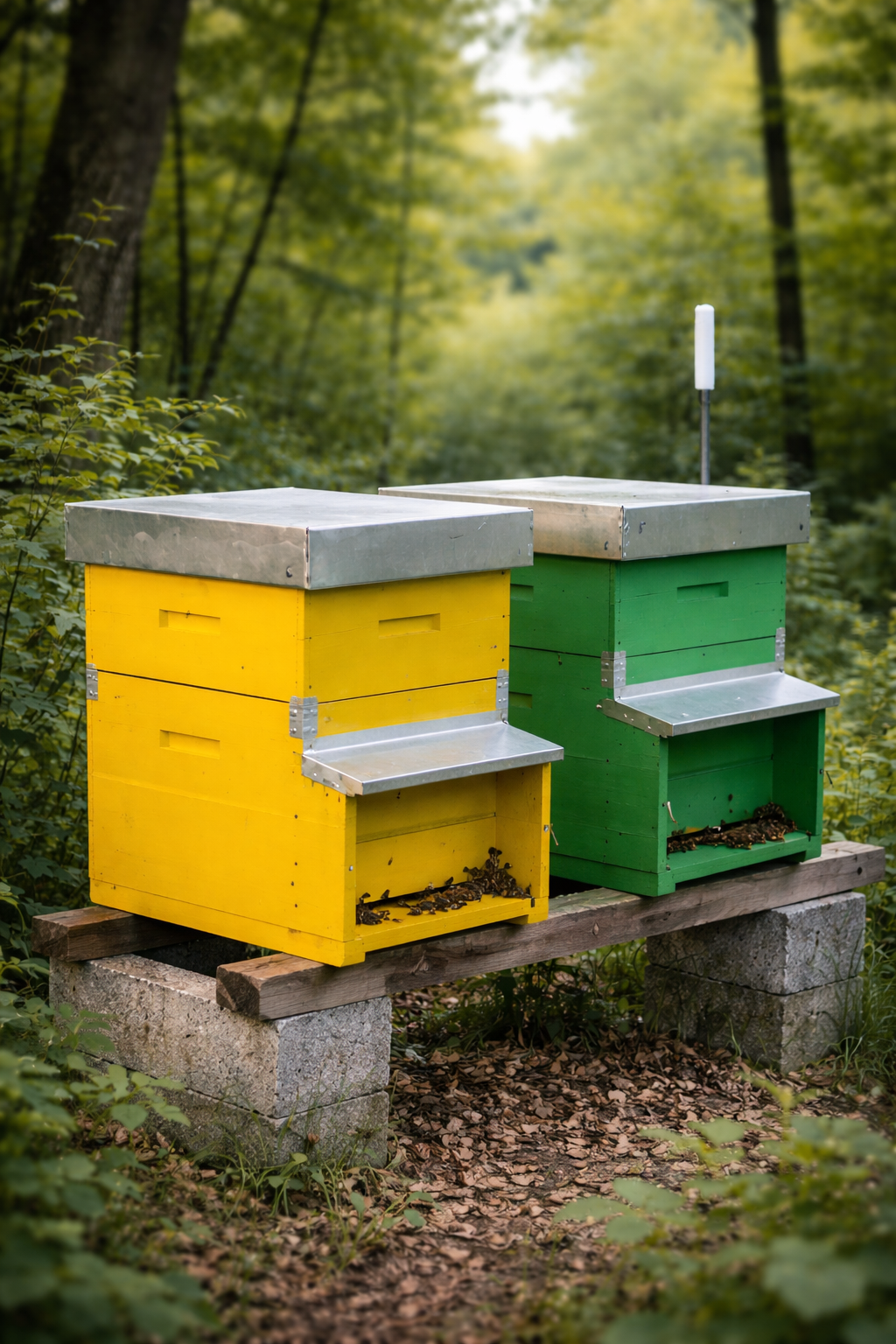
We design and develop intelligent ultra-low-power IoT systems for the monitoring and prediction of beehive health, leveraging artificial intelligence, advanced acoustic sensing, and TinyML. By capturing hive data and processing it directly at the edge, our platforms apply AI-driven models to identify patterns associated with colony vitality and the presence of the queen, enabling early detection of potential anomalies.
Our architecture combines energy-efficient embedded systems, edge AI, and optimized learning models to ensure on-device inference on resource-constrained hardware, supporting long-term autonomous operation.
This research contributes to the advancement of precision apiculture by integrating artificial intelligence, edge computing, and sustainable sensing technologies to enhance predictive beehive management, support biodiversity conservation, and strengthen ecosystem resilience.
Robotics for Autonomous Fruit Harvesting
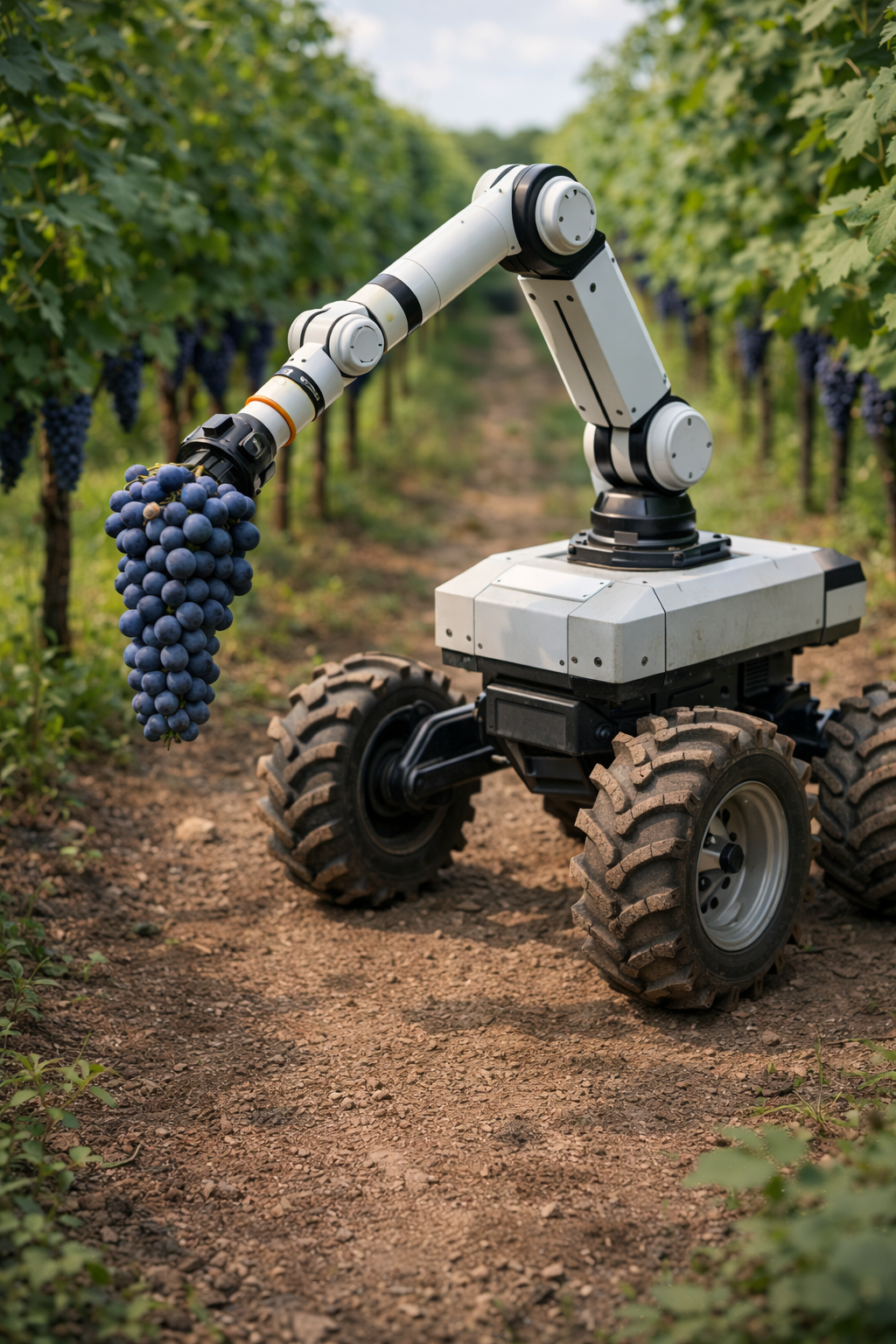
The research focuses on developing robotic systems for fruit harvesting, with a primary emphasis on grape harvesting but with the broader goal of creating a platform that can be easily adapted to other plants. The target environments are not limited to traditional flat farmland; instead, the aim is to design systems capable of operating effectively in challenging terrains such as hillsides and mountainous areas with steep slopes and small, irregular plots.
The design process follows an integrated approach in which the three core aspects of a robot, mechanics, electronics, and software/control, are developed together to achieve an optimized overall solution. From a mechanical perspective, the emphasis is on creating robots that can traverse all types of terrain, affordable and reliable in the field. From an electronics and software standpoint, the focus is on developing systems that combine vision and tactile sensing to accomplish tasks such as grasping fruit without causing damage, identifying the stem that connects the fruit to the plant, and navigating efficiently through branches and foliage. To support these goals, the research includes the development of custom vision systems and electronic skins.
Find your research thesis
Turn your curiosity into research at the frontier of quantum and nano systems.